Papa Baobab - Building an AI Artist
I created an AI influencer-musician as a full-stack AI music experiment
2025
•
Milan, Italy / Dubai, UAE
•
Independent Work
Highlights
Created an AI music project
Human-written lyrics + AI-assisted music production
Full pipeline: character → music → video → distribution → social clips
I’ve been an early AI adopter for years. I collaborated with OpenAI on social media using a generated T-shirt print, won a cash prize in a generative AI art contest, and wrote and sold a book about AI in design. After exploring AI in visual art and writing, I wanted to test it in music - end to end.
That experiment became Papa Baobab, an AI music project.
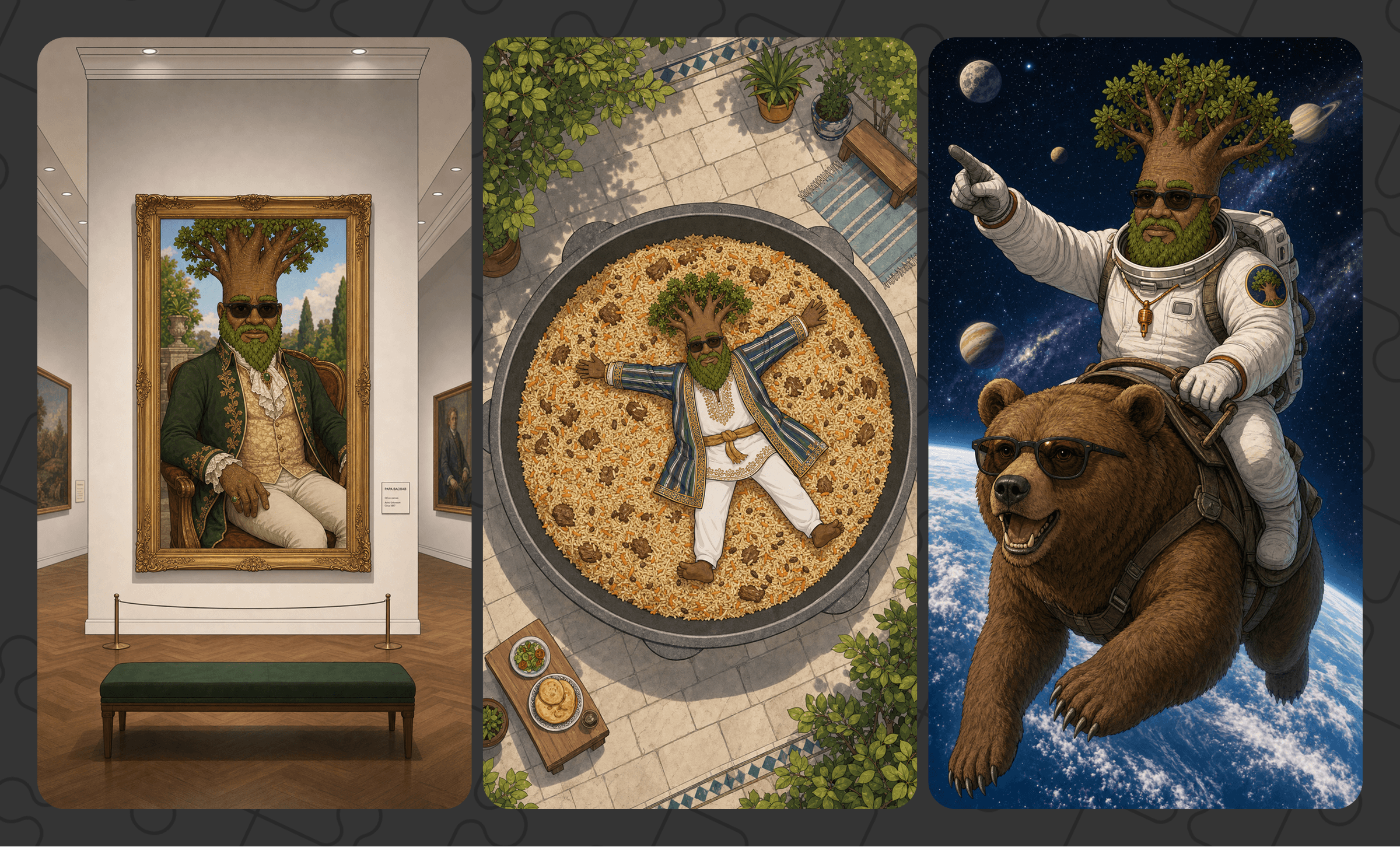
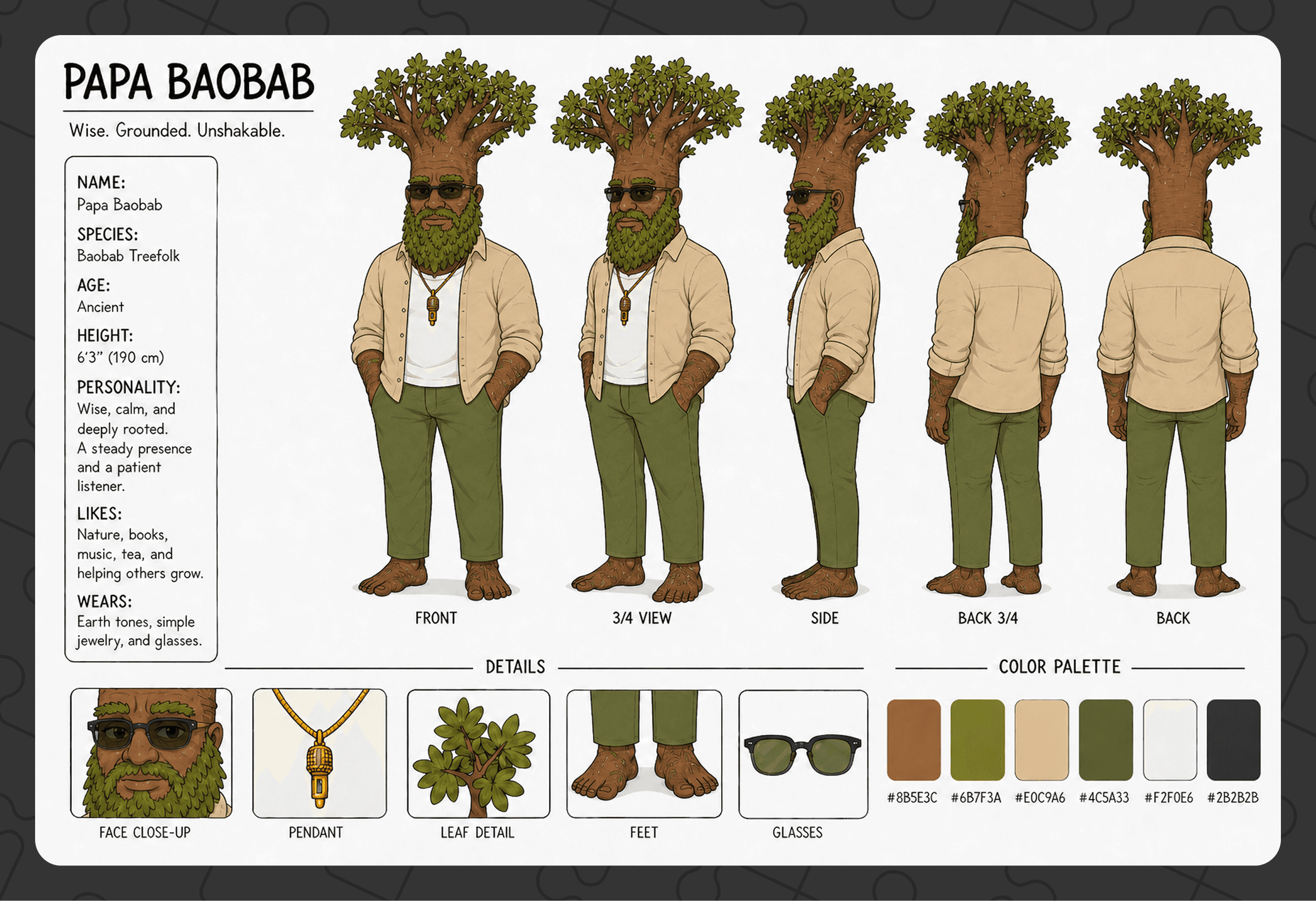
The name Papa Baobab was chosen for its sound, not its meaning. It has a Doo-Wop–like rhythm - something you can almost sing. In Russian especially, it feels musical, closer to “ta-da-da” than a name. That quality defined the character before anything else.
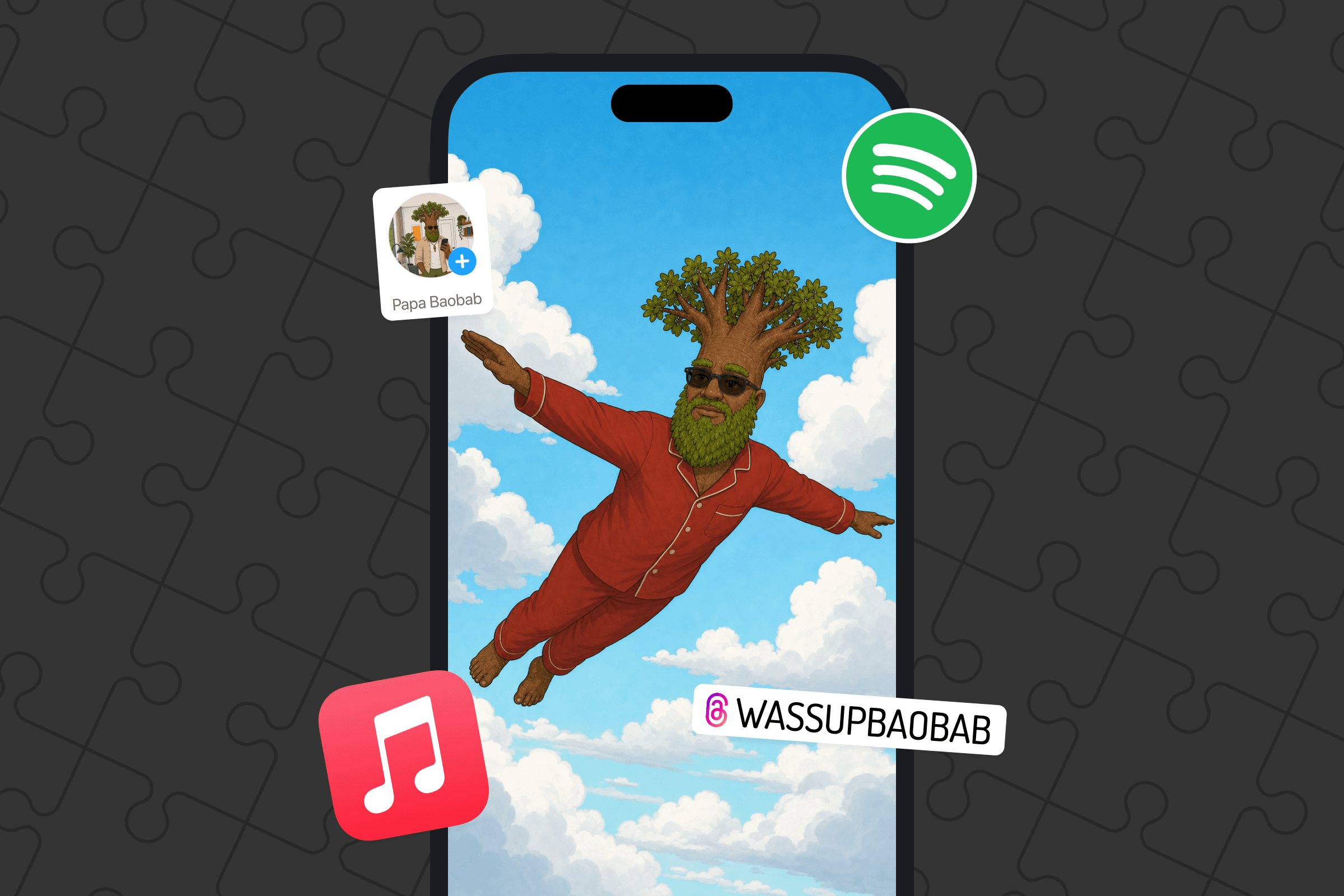
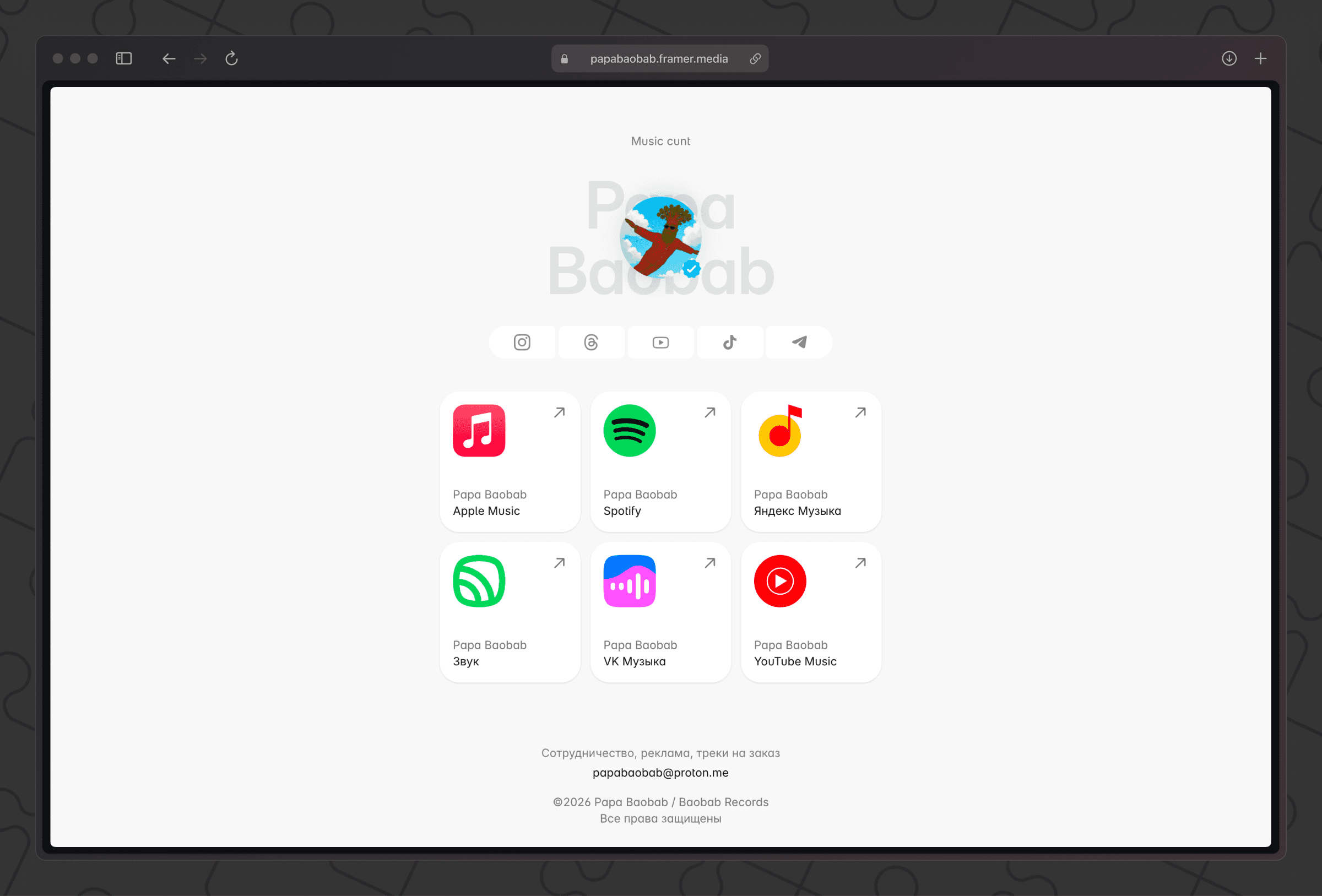
I used my design skills to create a webpage for the artist. It included links to Papa Baobab's page on popular streaming services such as Apple Music, Spotify, Yandex Music, etc.
I deliberately chose to make the music in Russian. While the English market is bigger, the Russian-speaking audience is still large and spread across many countries. Less noise, more space to experiment.
Lyrics stay human. I write them myself because that’s the core of the project. They’re designed to sound naive or silly unless you slow down and actually listen. Humor is part of the structure, not decoration.
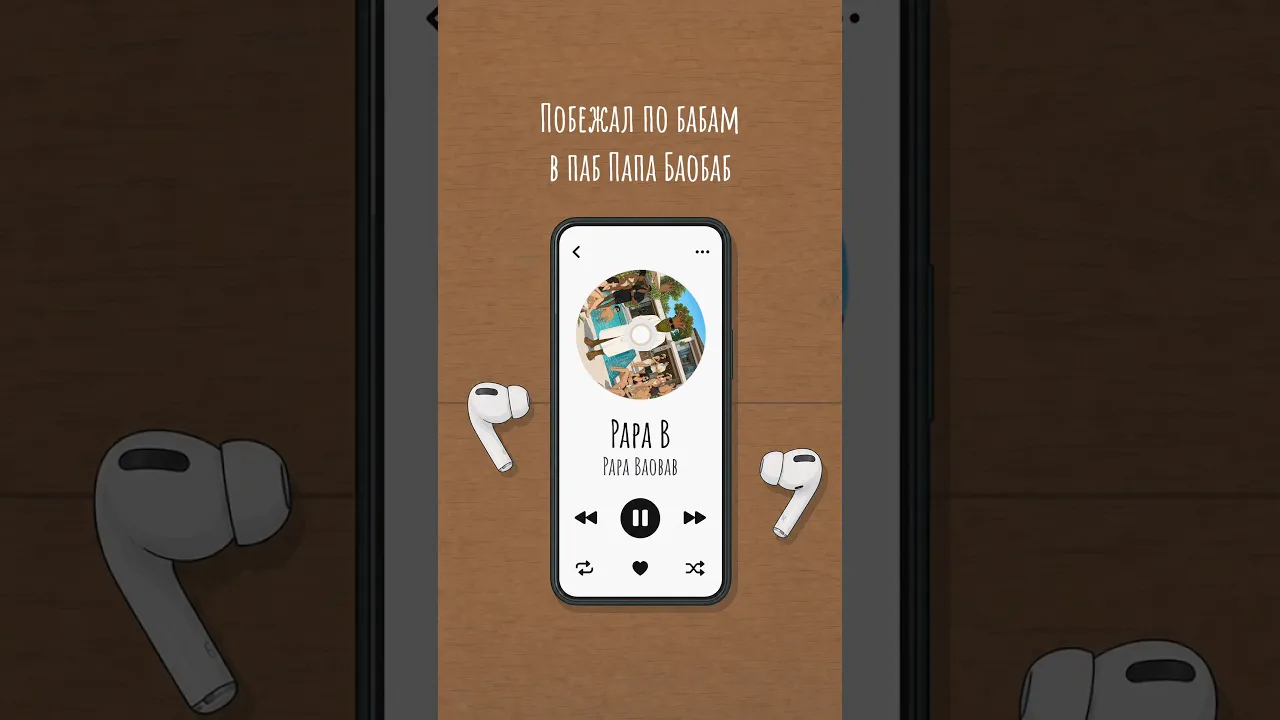
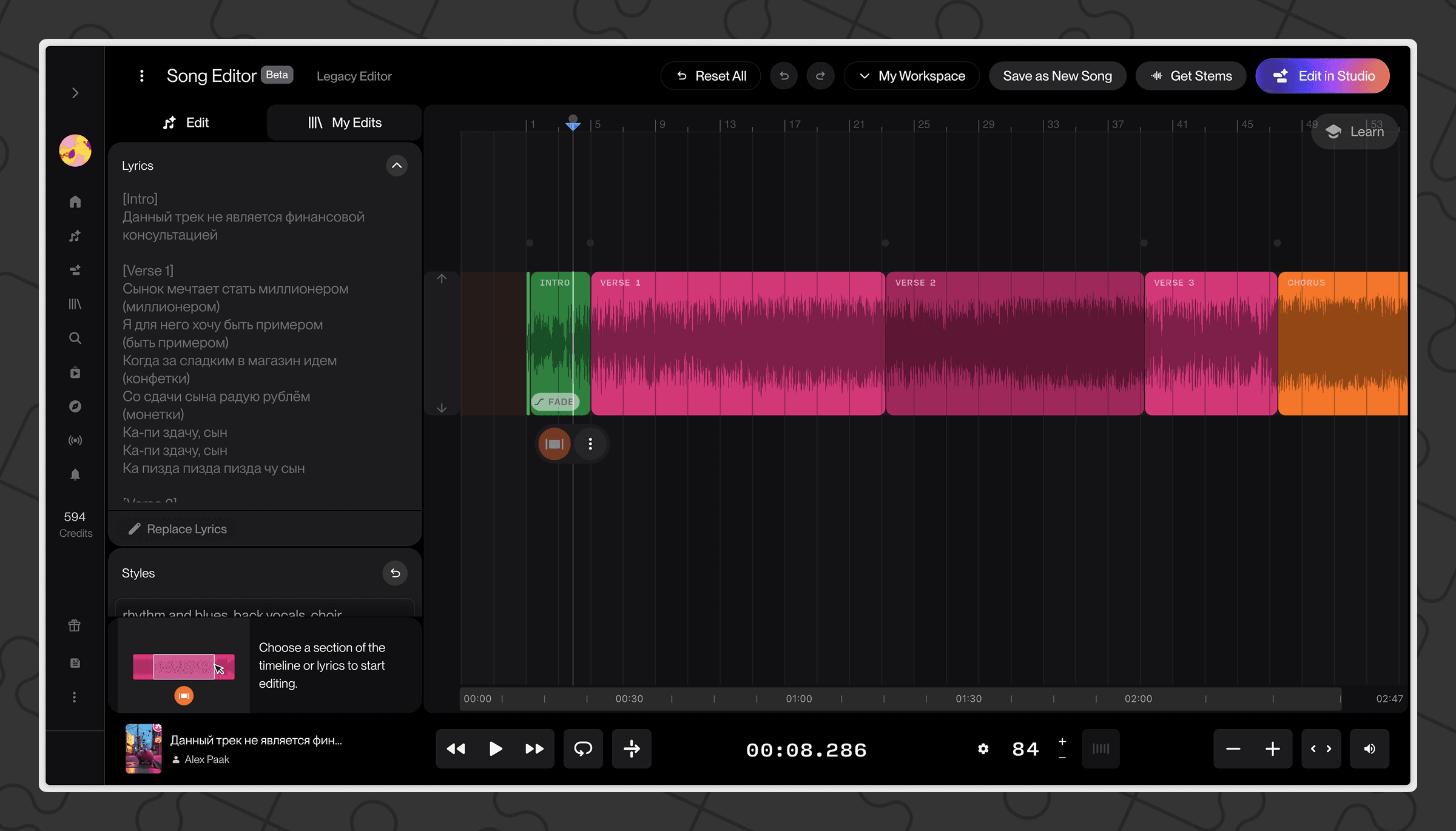
Once the lyrics are done, I come up with a melody in my head and record the full song as a rough vocal memo on my iPhone. I then use Suno AI with very explicit input to generate the final music and arrangement.
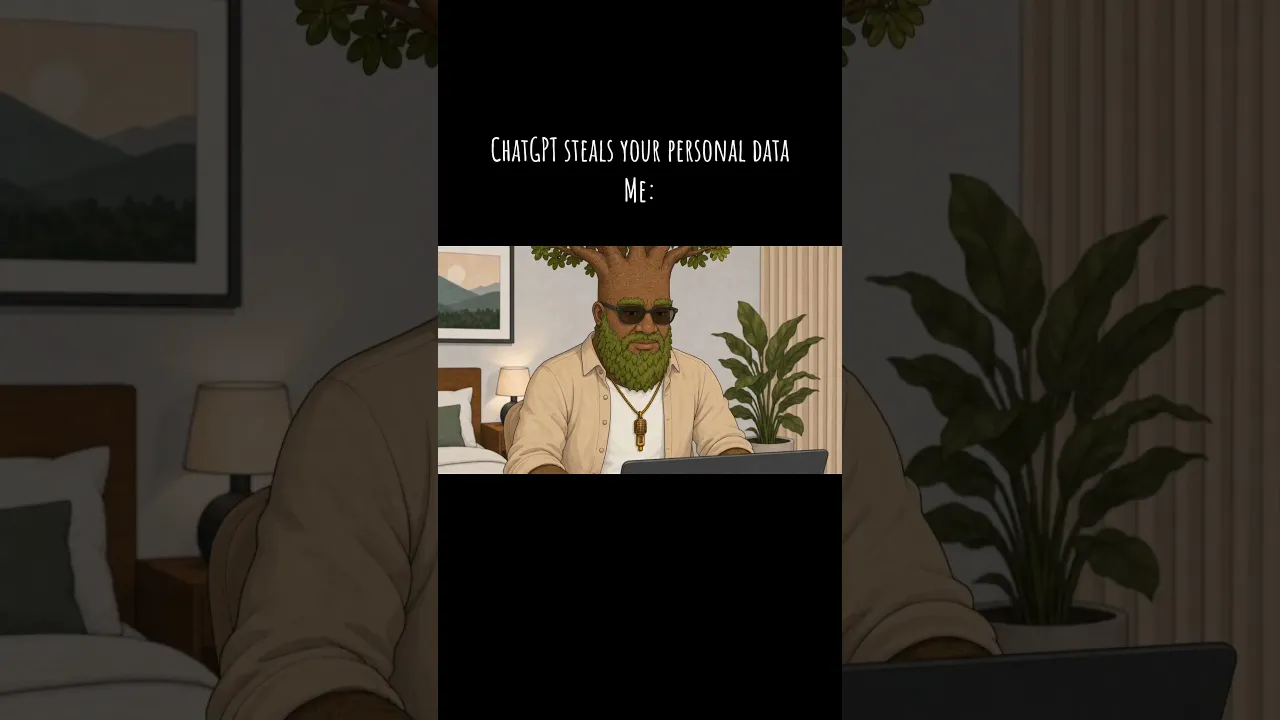
For visuals, I generate key frames of Papa Baobab using GPT Image and animate them using tools like Kling AI and Google Flow. I assemble full music videos, then cut them into shorter edits for social platforms.

The final step is packaging and distribution: naming tracks, designing album art and covers, submitting music to distributors, and publishing to Spotify, Apple Music, and other platforms.