Writing About AI, With AI
Early AI adopter; interviews with designers; living digital book; collaboration with OpenAI
2022
•
Almaty, Kazakhstan
•
Independent Work
Highlights
OpenAI Instagram collab featuring my AI-generated T-shirt print
Early AI adopter; generative art contest cash prize
Wrote a digital-only “living” book on AI in product design
Conducted interviews across roles (junior → director)
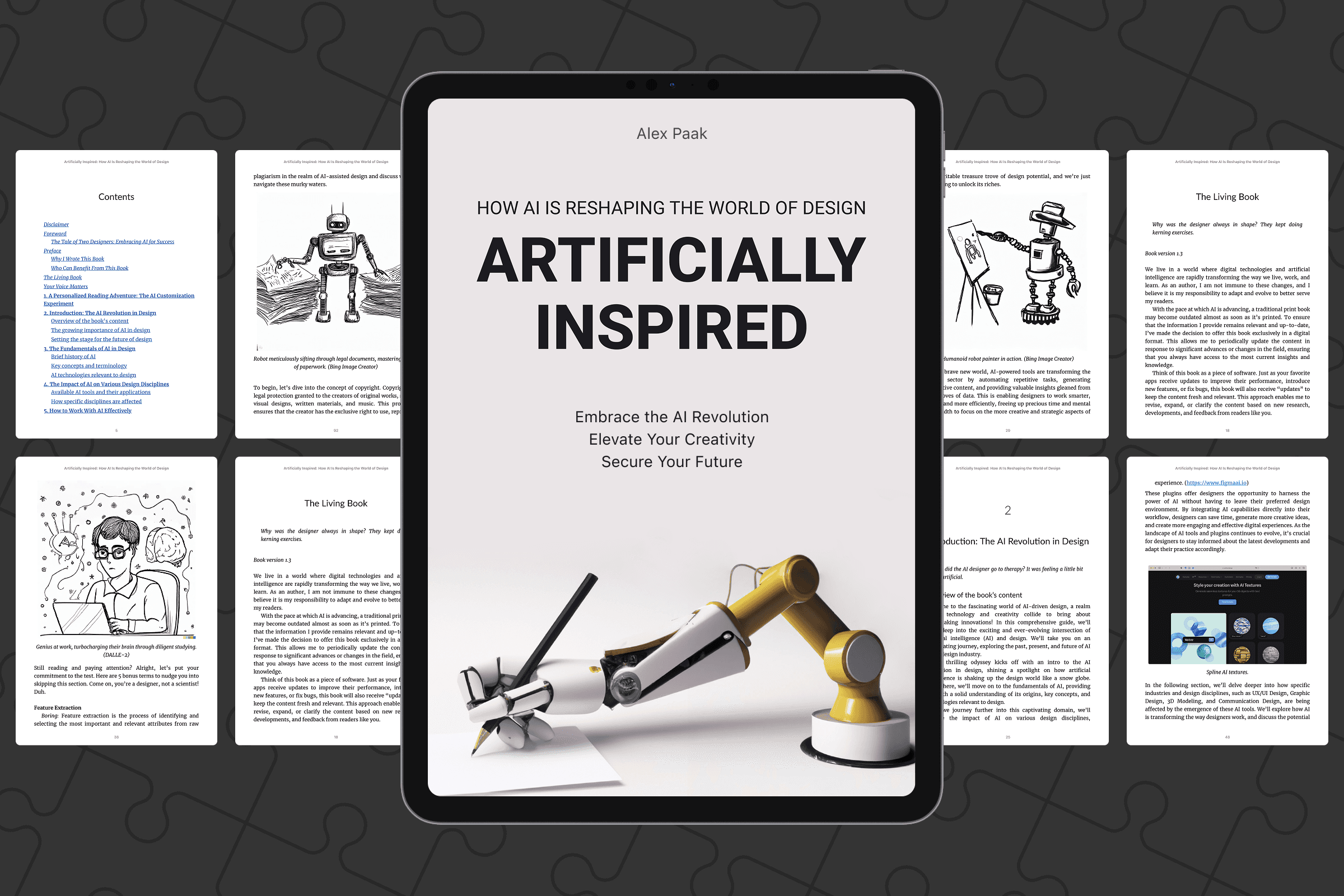
I got into AI relatively early. I won prize money and a runner-up title in a generative art contest about an Internet country, and a short video of my AI-made T-shirt print ended up as an OpenAI collaboration on Instagram.
When I looked for a book on how AI would change product design, there was nothing. So I decided to write the book I wanted to read. The twist was obvious: write a book about AI while using AI.
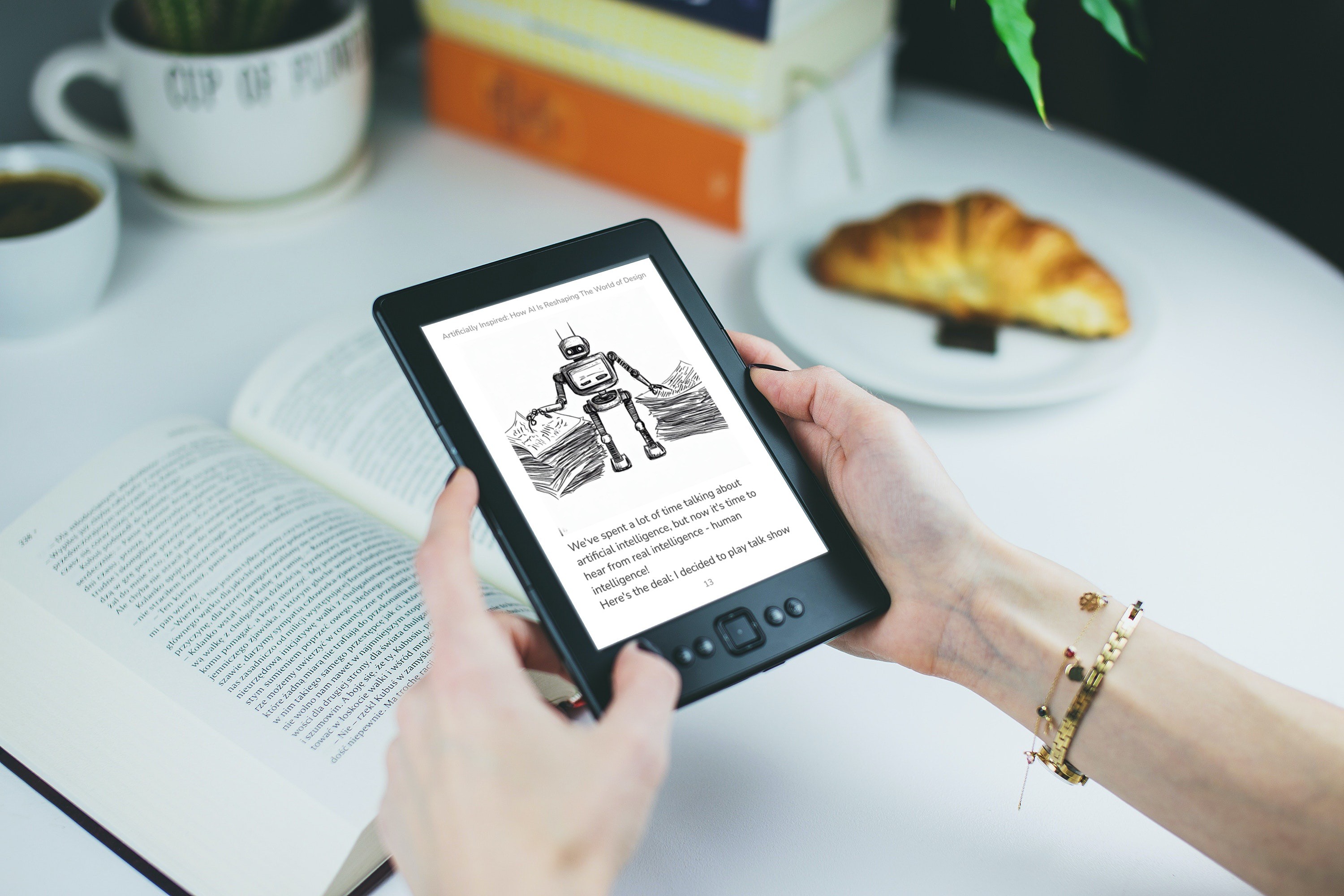
At that time AI was extremely limited: super short input/output, almost no memory even in a single thread, no file uploads, no web search - basically the bare minimum. To make it work I created a method. I started with only chapter names. Then I zoomed into each chapter and wrote section names. Then I zoomed further into subsections. Only after that did I write paragraphs. Finally, I zoomed back out, merged pieces, and formed connections across sections until the whole thing read like a proper book.
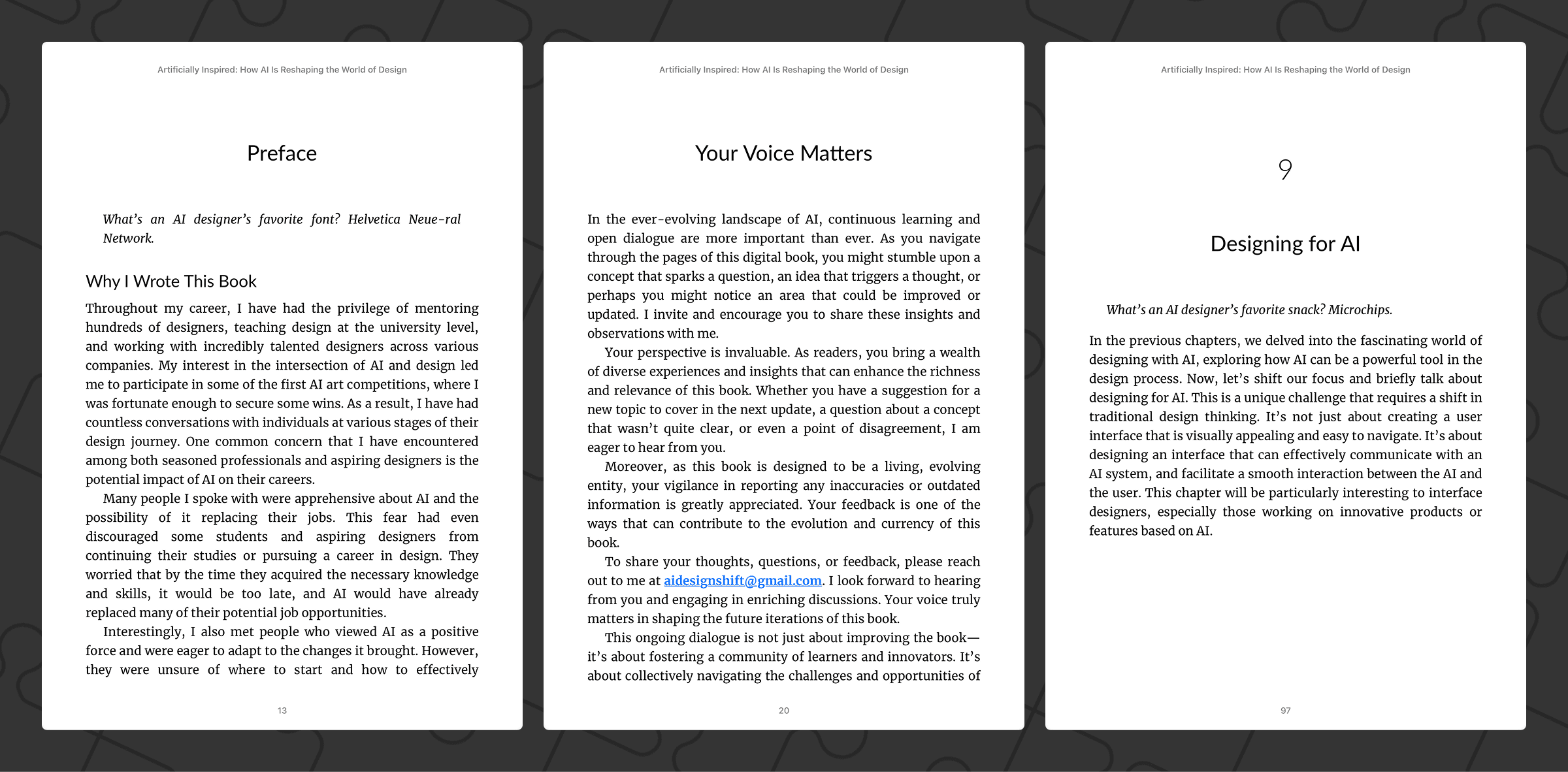
I also reached out to designers at different levels - from juniors to directors - and asked what they thought and felt about AI. I stitched those interviews into a bonus chapter at the end so readers could see different perspectives, not just mine.

I launched it as a living, digital-only book and shipped a couple of updates. It made $354. Then the field started moving faster than a book can. I could keep selling and patching but I chose to stop because I didn’t want to charge people for something that would be stale by the time they finished reading it.
In the end, Artificially Inspired did what I needed it to do. It forced me to think clearly about AI and design, build a method to write with limited tools, and collect a range of voices from the industry. It earned a little money, taught me where a book works and where it doesn’t, and reminded me to stop when the medium no longer serves the reader.